




Call MCSRequest Care

Specialist support

Personal care focused on comfort, dignity and choice

Muzaana provides personal care, everyday help and calm company alongside the health professionals involved, following the person’s wishes and the agreed care plan.

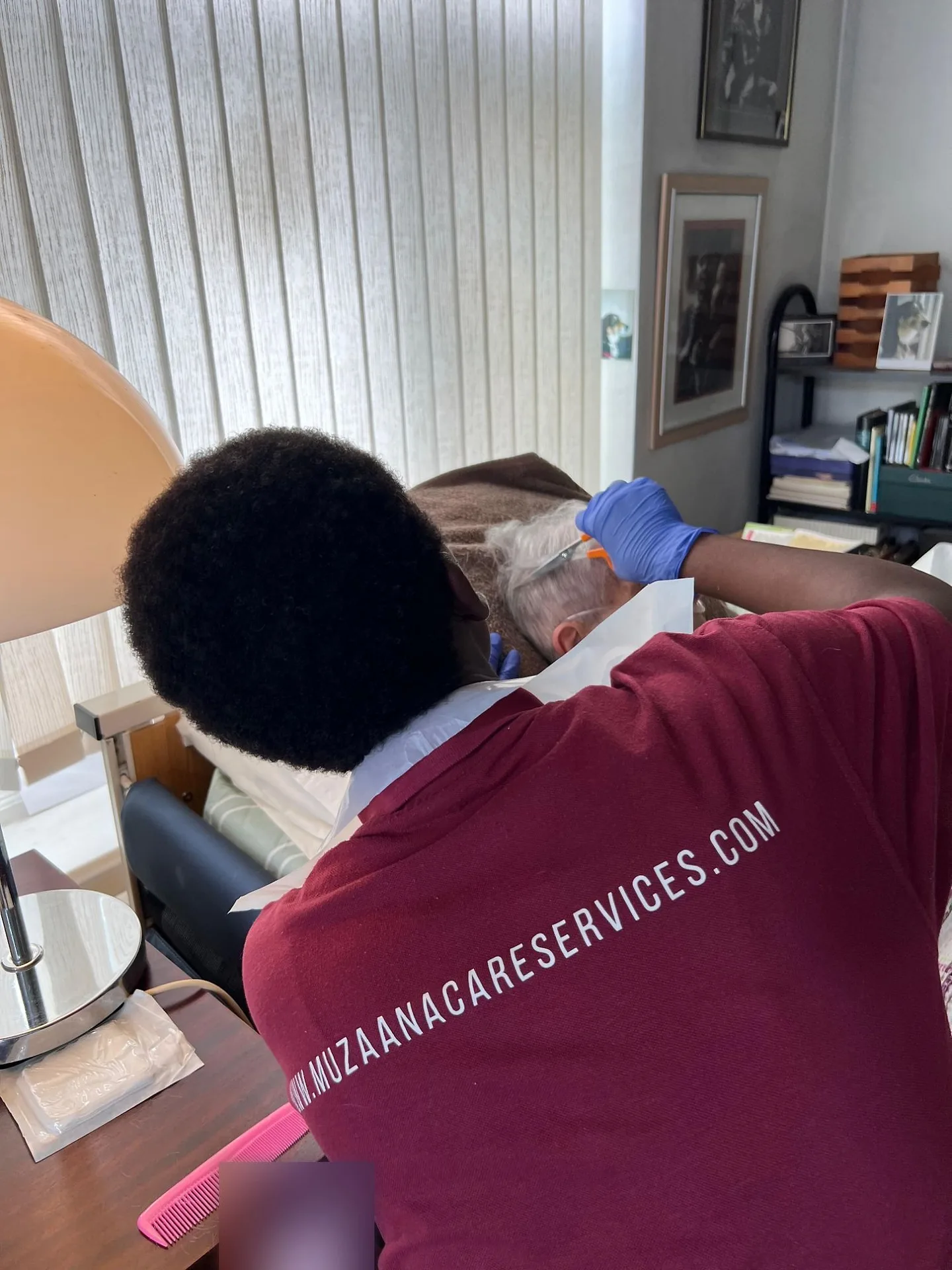
A Muzaana carer wearing gloves, trimming an older person’s hair as they rest in bed

Understanding the service

What palliative and end-of-life care means

Palliative support may begin earlier in a life-limiting illness. End-of-life care concerns the final stage, but Muzaana does not predict a prognosis or decide when either form of care begins.

Muzaana’s role is personal care and practical home support alongside the GP, district or community nurse, hospice and specialist teams involved. The plan can cover ordinary routines, company and the help a person wants with daily living.

What support can look like

What Muzaana’s care can include

The person chooses how they want ordinary care given. The care plan records the tasks, preferences and reporting route agreed after assessment.

  • Washing and dressing

    A carer asks first, explains what they are doing and protects privacy throughout personal care.

  • Continence and oral care

    Discreet help follows the person’s preferences and the personal-care instructions written into the plan.

  • Meals and drinks

    Support may include preparing simple food and drinks or helping with an agreed mealtime routine.

  • Comfortable, familiar routines

    A visit can follow the person’s usual pace, preferred clothing, resting routine and the small details that make home feel like home.

  • Calm company

    A carer can sit, listen, talk, read or share quiet time according to what the person wants that day.

  • Practical household help

    Carers can complete light tasks connected with daily living, such as washing up, changing bed linen or tidying the immediate area.

  • Medication support

    Any support with medication is assessed, agreed and recorded in the care plan.

  • Reporting relevant changes

    Carers pass relevant observations through the agreed route so the appropriate relative or health professional can respond.

What to understand

Dignity, wishes and safety

Dignity is practical

Carers ask before helping, explain each task and give the person time to respond. They use the person’s preferred name, protect privacy and follow cultural, religious or spiritual practices recorded in the care plan.

The person can say who they want involved and what information Muzaana may share. We record those choices and follow their wishes where lawful, safe and within the agreed care plan.

Personal care and health care have different roles

Muzaana supports personal routines and everyday life. The GP, district or community nurse, hospice and specialist teams carry out clinical assessment and handle prescribing, symptom control, pain relief and nursing procedures.

Muzaana does not give clinical advice or replace those professionals. If carers notice a relevant change, they record it and use the reporting route agreed for that person.

What to do in an emergency

Muzaana is not an emergency or clinical-advice service. Follow the person’s agreed urgent-care plan, and call 999 for a life-threatening emergency.

Muzaana’s social-care role

  • Personal care, companionship, meals, drinks and practical help at home
  • Respect for the person’s privacy, preferred routines, beliefs and choices
  • Recording and reporting relevant changes through the agreed route
  • Calm company during agreed visits, led by what the person wants that day

The health team’s role

  • GPs, district or community nurses, hospices and specialist teams handle clinical assessment and medical advice
  • Prescribing, symptom control, pain relief and nursing procedures sit with the appropriate health professional
  • Muzaana does not provide diagnosis, prescribing, symptom control, pain relief or nursing procedures
  • The agreed urgent-care plan sets out who to contact, with 999 for a life-threatening emergency

How care begins

Starting care is simpler than you may think

  1. Step 1: Tell us what support is needed

    Tell us what is happening, what support may help and which routines or preferences matter to the person.

  2. Step 2: Have a care conversation and assessment

    We discuss the person’s needs, choices and day-to-day circumstances, including any risks or practical points that need a clear plan.

  3. Step 3: Agree the care plan and practical arrangements

    The written plan records the agreed support, how the person wants it provided and the practical arrangements that must be in place.

  4. Step 4: Start care and review it as needs change

    Care starts after the plan and arrangements have been agreed. Reviews allow the plan to change when the person’s needs, wishes or circumstances change.

Questions families ask

Answers before you decide anything

When can palliative support begin?
Palliative support may begin earlier in a life-limiting illness, while end-of-life care concerns the final stage. The health professionals involved guide the clinical plan; Muzaana does not predict prognosis or decide when either begins.
Can Muzaana help with medication?
Any support with medication is assessed, agreed and recorded in the care plan.
Does Muzaana provide pain relief or symptom control?
No. The GP, district or community nurse, hospice or specialist team handles pain relief and symptom control. Muzaana provides the personal care and practical help agreed in the care plan.
How are relatives or friends involved?
The care plan records who the person wants involved and what information Muzaana may share. Any involvement must respect the person’s wishes, the law and valid authority.
What should we do if the person needs urgent help?
Muzaana is not an emergency or clinical-advice service. Follow the agreed urgent-care plan, and call 999 for a life-threatening emergency.

What a family said about Muzaana

She and her team took the time to understand Mum’s needs and wishes, and consistently ensured her comfort, dignity and peace of mind at all times.

Vanessa CozensFamily memberGoogle review

Talk to our care team

Talk through the help needed at home

Tell us which personal routines or everyday tasks have become difficult and who is already involved. We can discuss an assessment and the social-care support Muzaana may be able to provide.

You can contact us for yourself, a family member or someone you support professionally.

Map data © OpenStreetMap contributors